NFL · August 15, 2026
Vikings Edge Giants as Injuries Sideline New York's Offense
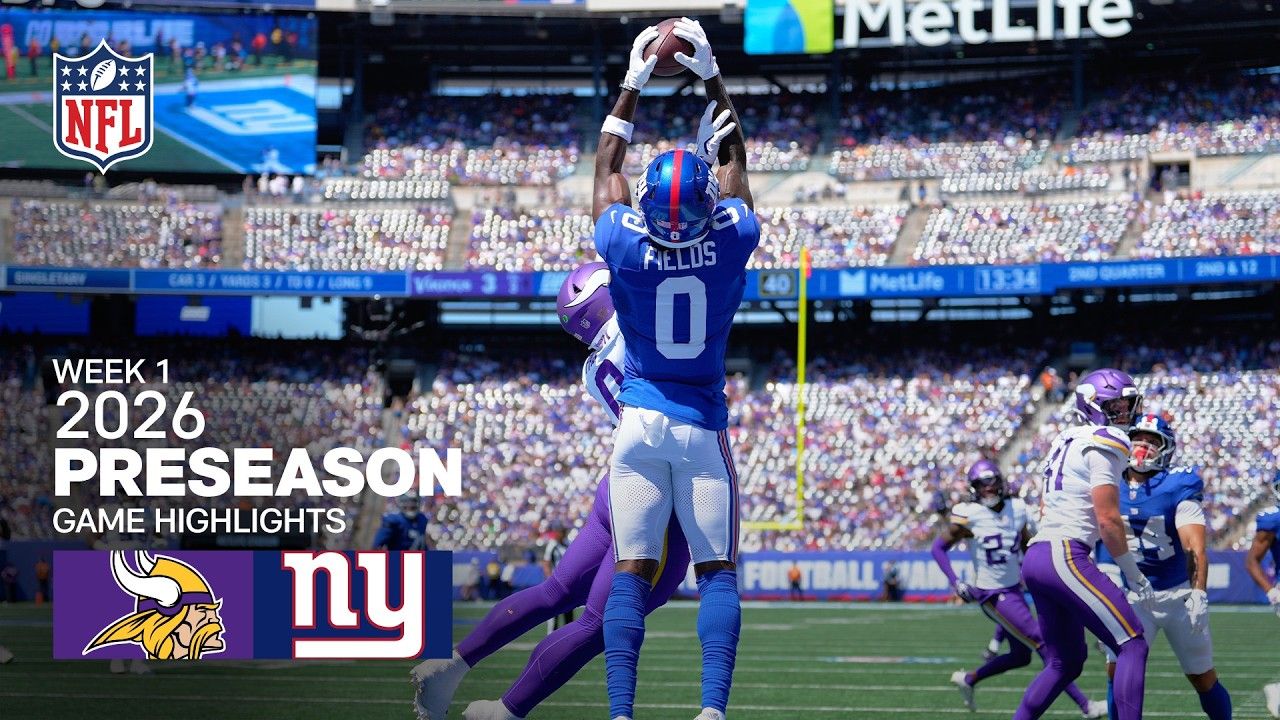
The Minnesota Vikings secured a narrow thirteen to ten victory over the New York Giants in a preseason contest defined less by explosive scoring and more by the strategic exploitation of structural weakness. While the final margin suggests a tightly contested affair, the game flow revealed a decisive advantage for Minnesota, which capitalized on significant injuries in the Giants' offensive line to control the tempo. The result validated a pre-game forecast that prioritized defensive resilience and personnel availability over team reputation, highlighting how critical roster depth becomes even in low-stakes environments.
Before kickoff, the analytical case for the Vikings rested on the premise that the Giants’ offensive vulnerabilities would be exposed by Minnesota’s disciplined defensive scheme. Observers noted that New York entered the matchup missing key interior linemen, including starting center John Michael Schmitz and backup Lucas Patrick, which forced rookie Bryan Hudson into heavy first-team responsibility. This structural fragility aligned with the forecast’s contrarian scenario, which predicted that New York would struggle if their quarterback, Jaxson Dart, lacked adequate protection and relied on extended action against a rugged defensive front.
The game unfolded exactly as the position anticipated, with Minnesota’s defense, guided by head coach Brian Flores, consistently pressuring Dart and limiting New York to a mere seventy yards on the ground. The Vikings recorded two sacks, including a devastating hit by Jay Ward, proving that their ability to exploit line mismatches was the primary driver of the outcome. By turning New York’s personnel shortages into sustainable defensive pressure, Minnesota neutralized the high volatility expected from the Giants’ rookie quarterback, confirming that the forecast correctly identified the decisive factor: the collision between superior depth and critical injury.
In the end, the prediction proved accurate not because of superior offensive firepower, but because it correctly read the importance of line protection and defensive adaptability. The Giants’ attempt to leverage special teams field position could not overcome the systemic disadvantage created by their compromised offensive line. This contest serves as a stark reminder that in the NFL, even during the preseason, the margin between victory and defeat often hinges on who can better manage roster limitations, a nuance the forecasting model successfully captured where others might have only seen two teams on paper.
Highlights
Images and videos courtesy ESPN