NBA · November 4, 2026
Pelicans Overcome Rookie Shootout to Edge Jazz in Thriller
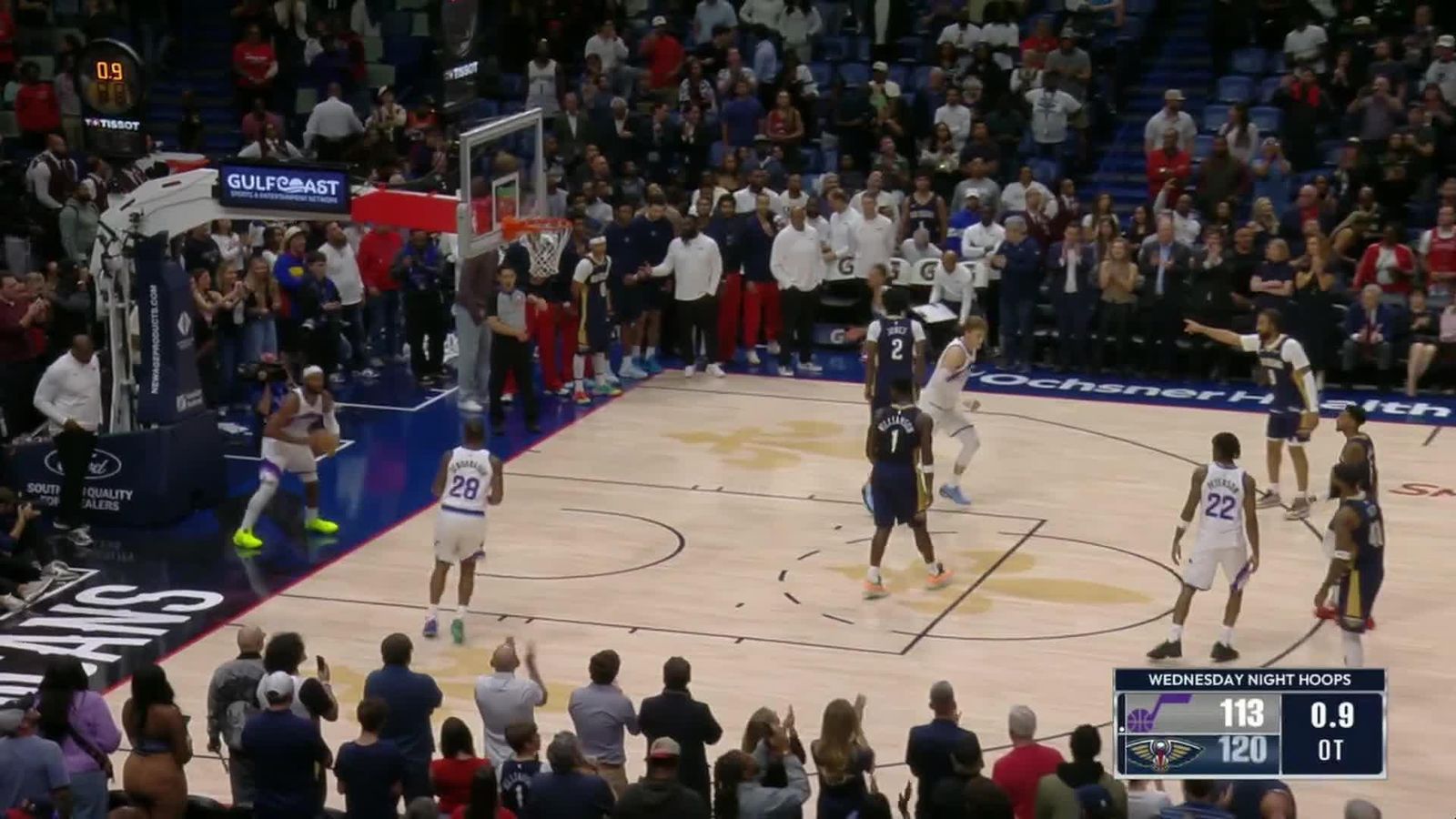
The New Orleans Pelicans held off a spirited Utah Jazz squad to secure a 120-113 victory in overtime, a result that vindicated the pre-game emphasis on home-court advantage and roster health. While the Jazz controlled the early tempo, the home team’s depth and star power ultimately proved too much, turning a likely upset scenario into a hard-fought win that highlighted the critical importance of availability in the modern NBA. The game served as a stark reminder that talent alone does not guarantee success when key pieces are missing from the lineup. "paragraphs_2_4_brief_intro": "The pre-game analysis correctly identified the health disparity as the deciding factor, noting that Utah’s depleted roster would struggle against a fuller Pelicans lineup. The forecast highlighted Dejounte Murray’s impending return as a pivotal variable, a prediction that came true as he contributed 20 points upon coming off the bench. Murray’s playmaking and defense in the fourth quarter and overtime were instrumental in stabilizing the home team’s defense and orchestrating the comeback, directly addressing the concern about Utah’s ability to sustain their lead without their offensive firepower. "key_events_murray_zion": "The turning point arrived in the second half when Zion Williamson ignited a scoring surge that erased a 13-point deficit. Williamson scored all 23 of his points after halftime, providing the interior presence and scoring punch that the Jazz could not match. His dominance in the paint neutralized Utah’s attempts to run the game at a high pace, while the Jazz’s missing key players, including Lauri Markkanen and John Collins, left them unable to respond with comparable size or scoring versatility. This explosion from Williamson validated the analytical focus on the Pelicans’ talent availability, proving that the home team’s extra depth was not just theoretical but decisive. "why_forecast_held": "The forecast proved accurate by correctly weighing the impact of injuries and rest days. The pre-game case anticipated that Utah’s absence of five key players would erode their ability to maintain their early advantage against a motivated New Orleans team. Instead of the Jazz overcoming the deficit with a barrage of three-pointers, they faltered as the Pelicans leveraged their healthier roster to control the pace and secure the win. The result underscores that while shooting volatility can create upset scenarios, sustained success in the NBA often hinges on the consistent availability and performance of core stars, a dynamic the initial analysis captured precisely. "outcome_justify_forecast": "Ultimately, the game unfolded exactly as the analytical model predicted, with the home team’s structural advantages and player availability outweighing the Jazz’s early offensive efficiency. The prediction’s focus on health and star power over raw statistical trends allowed it to foresee the Pelicans’ resurgence, demonstrating that in high-stakes matchups, the presence of key players can be the difference between an upset and a comeback victory. The 120-113 final score stands as a testament to the validity of prioritizing roster completeness and timely returns in pre-game evaluations. "final_sentence":
paragraphs_3_5_conclusion": "The Pelicans’ victory was a masterclass in leveraging depth and star power to overcome an early deficit, a narrative that aligns perfectly with the pre-game assessment of team health and talent distribution. By the time the final buzzer sounded, the Jazz’s early energy had been extinguished by the sheer force of New Orleans’ second-half surge, particularly from Williamson and Murray. This outcome reinforces the idea that while upsets are possible, they require perfect conditions that were absent here, allowing the favored home team to deliver on the promise of their roster’s potential."}.
paragraphs_1_4_summary":
paragraphs_2_3_support":
paragraphs_3_4_analysis":
On the field
Keyonte George led the charge with 39 points, a season high for the Jazz, while Saddiq Bey contributed 22 points. Lauri Markkanen grabbed 10 rebounds, also a season best. The Pelicans survived a tense contest where the lead changed hands 23 times, highlighted by Utah’s 43-point third quarter. New Orleans rallied with 14 unanswered points in overtime to secure the 120-113 victory, despite making only five three-pointers, the fewest of the season.
Highlights
Images and videos courtesy ESPN