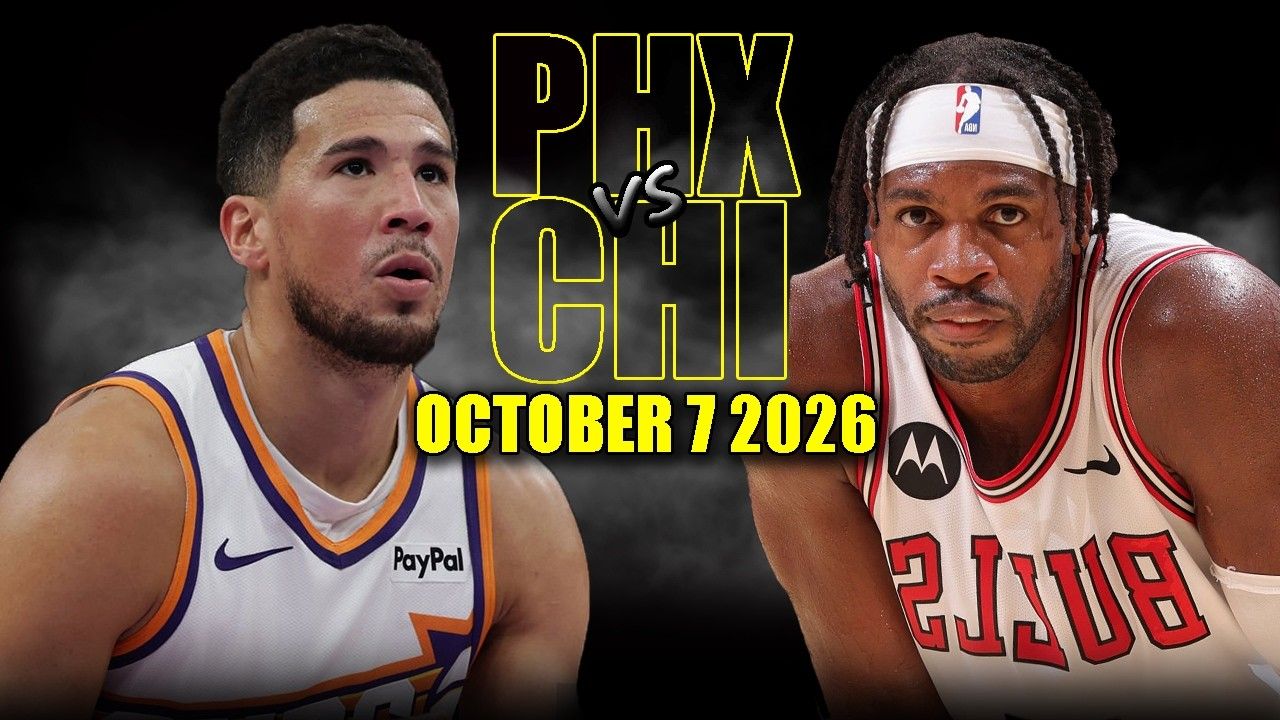
NBA · October 7, 2026
Bulls Young Guns Unseat Sun Star-Rostered Phoenix
The Chicago Bulls defeated the Phoenix Suns 124-117 in a preseason opener that completely upended the expected hierarchy of the Western Conference’s elite talent. The final score reflected a decisive shift in momentum, with the home team overcoming a roster packed with All-Star caliber stars to secure a comfortable victory. This result served as a stark reminder that preseason matchups often defy conventional wisdom, where tactical experimentation and minute restrictions can easily override raw talent disparities. The game unfolded not as a showcase of superstar dominance, but as a battle of depth and execution during the crucial stretches when the main characters sat on the bench.
Going into the contest, the analytical case heavily favored Phoenix, predicated on the assumption that their superior individual talent would inevitably control the outcome. The pre-game position relied on the presence of high-impact players like Devin Booker, Kevin Durant, and Bradley Beal, operating under the general baseline that favorites typically win roughly two-thirds of regular season games. The logic held that even with some rotational adjustments, the Suns’ physical tools and experience should overpower Chicago’s younger, less proven group. It was a forecast built on the merit of star power, assuming that the Bulls would struggle to keep pace when Phoenix’s primary weapons took the floor.
The reality on the court, however, told a different story, exposing critical blind spots in the initial assessment. Devin Booker played only about sixteen minutes, scoring thirteen points in the first half before being held out for the remainder of the contest. Meanwhile, Chicago’s young core, including Zaccharie Risacher and key contributors like Jalen Smith, seized the moment, playing extended minutes and dictating the tempo. The Suns’ bench, already reeling from severe turnover issues in their previous outing against Detroit, could not maintain leads when starters rested, allowing the Bulls to capitalize on transition opportunities and controlled possessions. Chicago’s new coach explicitly sought to test a fast-paced, young lineup, while Phoenix prioritized rest following a grueling loss, creating a mismatch in effort and personnel availability that the original forecast failed to anticipate.
Ultimately, the prediction proved incorrect because it underestimated the specific contextual factors unique to preseason basketball. While the base rate suggests home teams and favorites have a significant advantage, those trends rely on near-normal rotations and competitive intensity. Here, the deliberate limitation of star minutes and the strategic deployment of youth by Chicago neutralized Phoenix’s biggest assets. The Suns’ inability to execute with their second unit, compounded by the Bulls’ energized defense and transition play, rendered the talent gap irrelevant. This game serves as a cautionary tale against overvaluing regular season projections in a window defined by volatility, rotation shuffles, and tactical experimentation rather than pure competitive output.
On the field
The Phoenix Suns exploded for 37 points in the opening quarter, establishing an early rhythm that defined their offensive output. However, the contest remained fiercely competitive, with the lead changing hands six times throughout the contest. In the decisive fourth quarter, the Chicago Bulls seized control, scoring 11 unanswered points to secure the 124-117 victory. This late surge overcame Phoenix’s early dominance, highlighting Chicago’s resilience in a tightly contested battle where momentum shifted repeatedly before the Bulls pulled away down the stretch.
Highlights
Images and videos courtesy ESPN