MLB · August 10, 2026
Phillies Survive Grind to Edge Cardinals in Ten-Inner Thriller
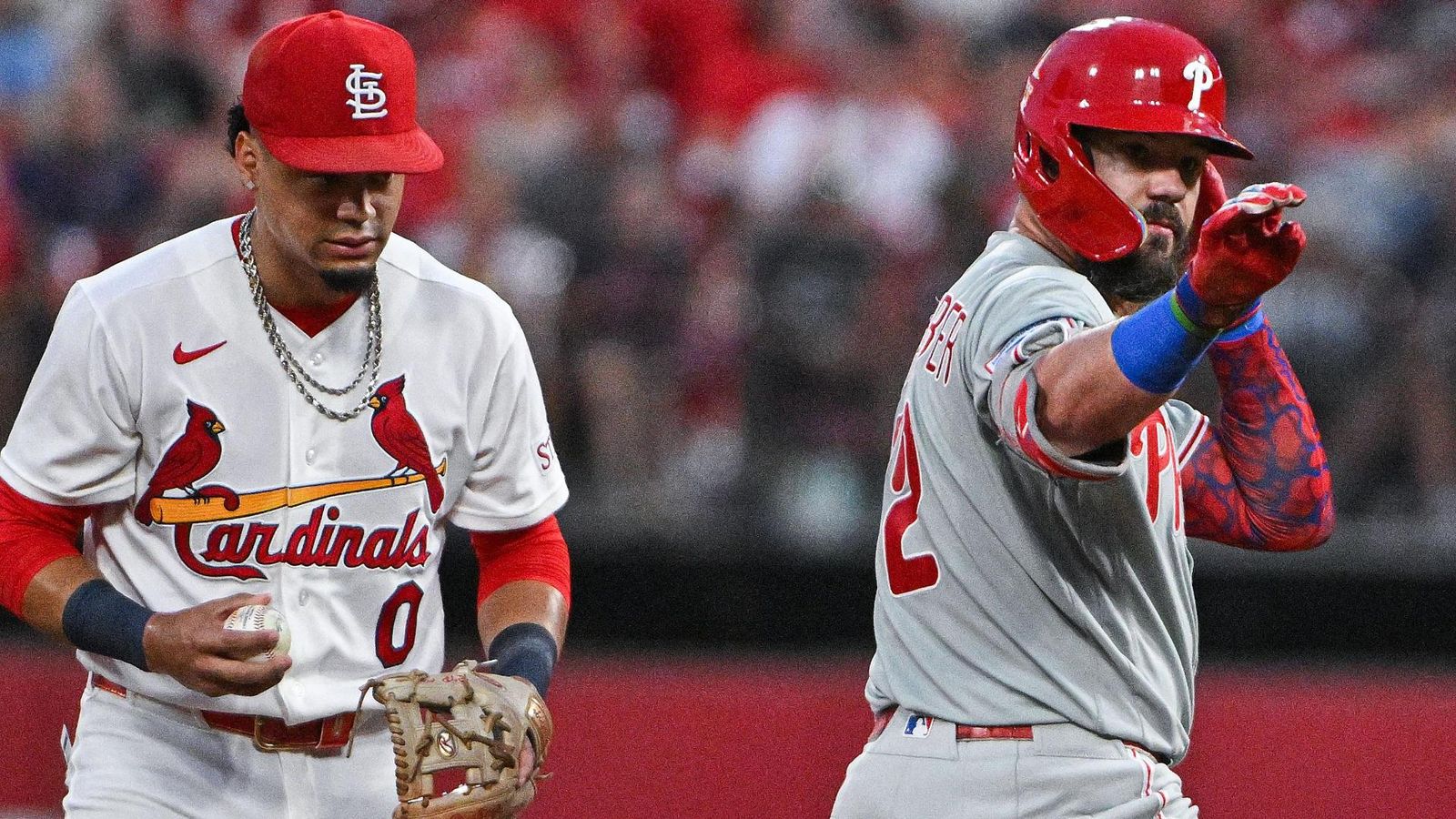
In a contest that defined the limits of endurance as much as skill, the Philadelphia Phillies edged the St. Louis Cardinals six to five, securing a hard-fought victory that defied the heavy weight of exhaustion pressing against them. The final score reflected a battle where momentum swung violently back and forth, ultimately decided by a late surge from Philadelphia’s bats when the game seemed destined for a Cardinals’ relief anchor. What looked like a textbook win for St. Louis in the late innings unraveled due to a pivotal eighth inning that shifted the entire narrative of the series.
Going into Tuesday night, the analytical forecast for the Cardinals leaned on the premise that Philadelphia’s staff was running on fumes. Analysts highlighted a punishing ten-game stretch in ten days, including three extra-inning affairs in the last five, suggesting that the Phillies’ bullpen would crumble under the strain. The pre-game case argued that St. Louis could leverage their own pitching depth to exploit this fatigue, counting on Andrew Painter’s perceived struggles and hamstring issues to limit Philadelphia’s early scoring opportunities and force the weakened relief corps into action sooner rather than later.
That positioning proved spectacularly wrong, and for two distinct reasons that caught the forecasters off guard. First, Andrew Painter was not the injured liability assumed; he was healthy and delivered a career-best performance, silencing the Cardinals’ lineup for over five innings and significantly preserving his tired bullpen. Second, while St. Louis pitcher Hunter Dobbins was solid, he was not the decisive factor. Instead, the Phillies’ offense found a second wind, exploding for two runs in the eighth to break a 3-3 tie. The prediction missed that Philadelphia’s starting pitcher could absorb the innings needed to keep the game close, allowing the offense to carry the load when it mattered most, rendering the projected bullpen collapse irrelevant.
The result underscores how quickly a forecast can fracture when human factors like player health and team morale diverge from statistical projections. By underweighting the magnitude of Philadelphia’s scheduling burden but completely misreading the physical status of their starter, the Cardinals’ side of the position relied on a narrative of inevitable exhaustion that simply did not materialize. Philadelphia’s win stands as a testament to clutch hitting and robust starting pitching, proving that even the most well-reasoned cases can be undone by a single player proving stronger than the data suggested.
Highlights
Images and videos courtesy ESPN