NCAA Basketball · November 3, 2026
LSU Tigers Suffer Historic Blowout Loss Amid Star's Absence
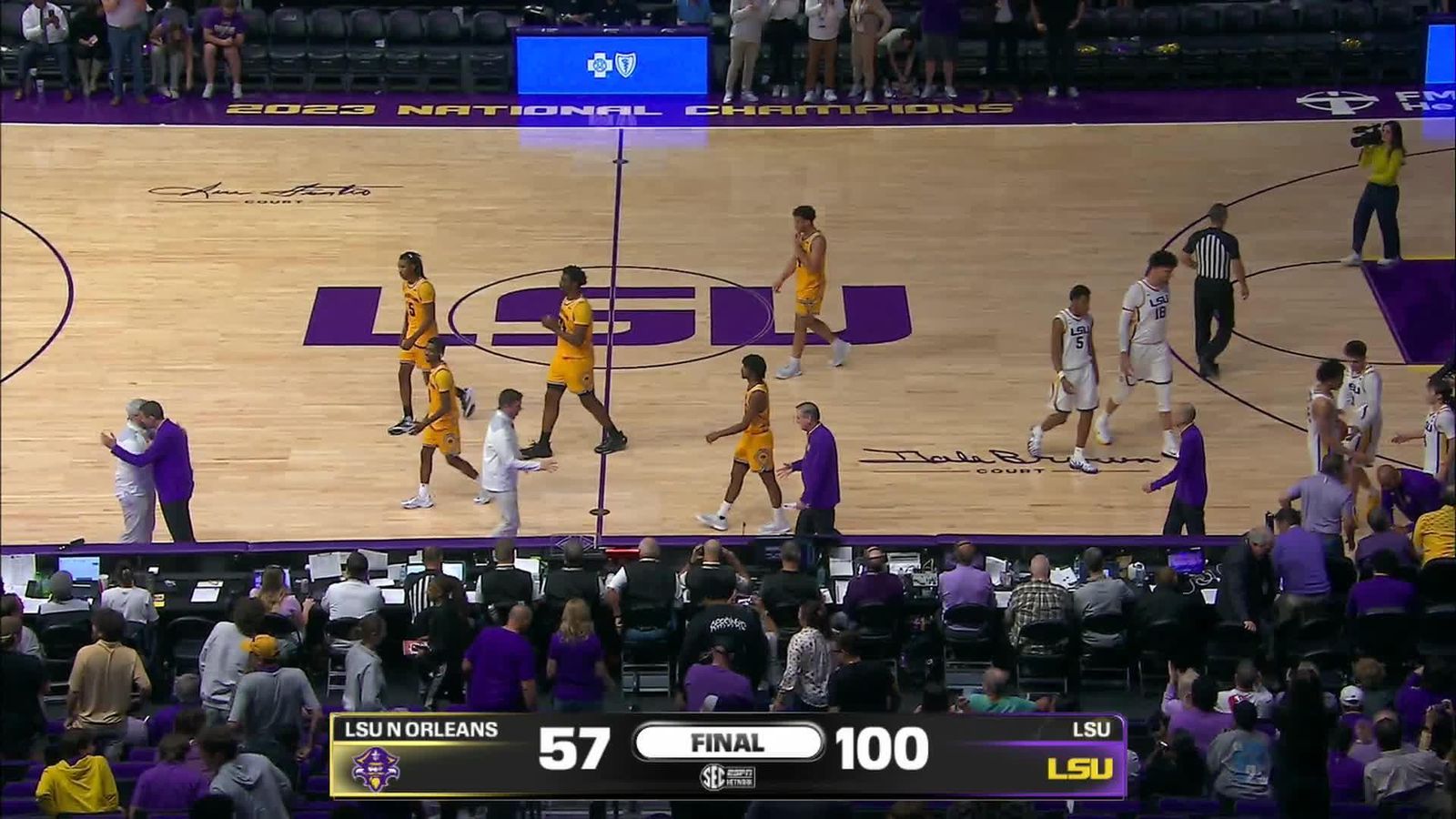
The LSU Tigers suffered a stunning 100-57 defeat to the LSU New Orleans Privateers in a season opener that defied every conventional expectation. The final scoreline reads less like a competitive college basketball game and more like a statistical anomaly, marking one of the most lopsided results in recent NCAA history. Far from a tight contest where home-court advantage would tip the scales, the Tigers were thoroughly outclassed, setting the stage for a retrospective that focuses less on basketball metrics and more on the administrative chaos that preceded tip-off.
Going into the game, the analytical case heavily favored the home team, the LSU Tigers. Historically, home teams in the NCAA win roughly sixty-four percent of their games, and the disparity in conference pedigree suggested a comfortable victory for the SEC powerhouse over their Southland Conference counterparts. The forecast acknowledged a slim possibility of an upset if early-season shooting struggles aligned with high turnover rates, but ultimately, the prediction rested on the assumption that LSU’s roster depth and talent level would be too much for UNO to handle in a low-volatility environment.
That assumption collapsed entirely due to a factor the pre-game analysis could not quantify: the deliberate absence of star recruit RJ Luis Jr. Despite a court order granting him eligibility, LSU coach Will Wade refused to play him, citing conference protocols in a high-profile standoff with the SEC. Without Luis, who averaged over eighteen points and seven rebounds per game in his previous season, the Tigers’ actual on-court strength was drastically diminished. The forecast correctly identified the talent gap between the programs but missed the crucial human element of roster availability, proving that even the most robust statistical models struggle to account for legal injunctions and coaching defiance.
The outcome serves as a stark reminder that sports predictions are only as good as the information available at the moment of placement. The Tigers did not lose because UNO played exceptionally well; they lost because their best player sat in the stands. The pre-game case correctly read the relative strength of the two programs on paper but failed to account for the self-inflicted wound of withholding its primary scorer. In the end, the blowout was not a testament to the Privateers’ dominance, but a consequence of internal conflict that rendered the Tigers’ nominal advantage irrelevant.
This game will be remembered not for its basketball, but for the unprecedented situation that defined it. The forecast was technically correct in its assessment of roster strength but fatally incomplete in its consideration of roster availability. As the dust settles on this historic loss, the focus shifts from the scoreboard to the lessons learned about the unpredictable nature of eligibility disputes. It was a rare instance where the variables that matter most are those that no model can fully capture, leaving fans and analysts alike to reconcile the gap between theoretical advantage and tangible reality.
Game clips
Images and videos courtesy ESPN