NCAA Basketball · November 8, 2026
Houston Cruises Past Cal In Decisive Road Victory
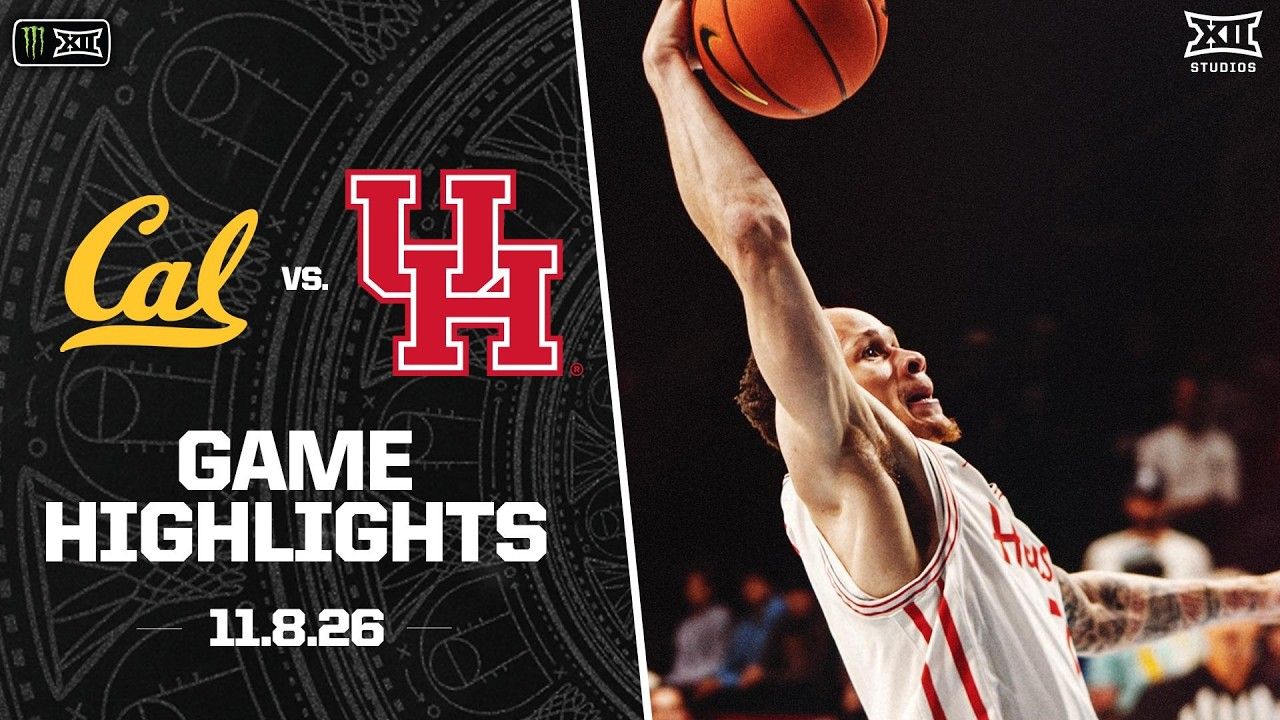
Houston Cougars dismantled the California Golden Bears 86-68, turning a daunting road trip into a rout that highlighted the vast gap between a top-ten contender and an unranked home squad. The central narrative of the evening was not a gritty defensive battle or a late-game hero, but rather the sheer dominance of Houston’s roster depth and defensive identity, which left little room for Cal’s hopes of an upset. The final score, an eighteen-point margin, signaled that this was a mismatch from the opening tip, with Houston controlling the pace and dictating the terms of the contest.
Going into the game, the analytical case for Houston was compelling. As a #10 team in the AP poll and #8 in the Coaches rankings, the Cougars arrived with momentum and a four-game winning streak. The argument rested on the strength of Big 12 defensive principles and a deeper bench capable of maintaining intensity over a full forty minutes. In contrast, California, while enjoying home-court support, had only recently defeated lower-tier opponents like Radford and Adams State, raising questions about their readiness to compete with a blue-blood opponent on a midweek slate.
The prediction correctly identified the winner and the lopsided nature of the result, validating the directional logic that Houston’s superior ranking and form would prevail. However, the degree of confidence attached to that forecast was notably miscalibrated. The pre-game analysis underestimated the true dominance of the Cougars, likely over-weighting the historical advantage of home courts and the early-season offensive variance of the Golden Bears. While the model recognized Houston as the favored side, it suggested a closer contest than the one that actually unfolded, reflecting a hesitation that the court did not share.
Ultimately, the outcome defied the subtle undercurrents of doubt present in the forecasting probability. The anticipation of travel fatigue and home-court energy was a red herring; Houston’s execution was too precise, and Cal’s offensive output was too inconsistent to bridge the talent gap. The forecast was right on the result but wrong on the texture, predicting a testable challenge for the visitors that instead became a procession. This game served as a reminder that while home-court bumps are a standard factor in analytics, they cannot always offset the raw disparity in roster quality and competitive pedigree.
In the end, the 18-point blowout was a clear testament to Houston’s status as a team poised for a strong postseason run. The Golden Bears put up a respectful fight, but the lack of sustained pressure and the inability to force turnovers in transition allowed Houston to manage the game comfortably. The retrospective shows that while statistical models may sometimes understate the likelihood of a blowout, the fundamental hierarchy of college basketball remains intact: depth, experience, and conference strength often dictate the final score more than location does.
Highlights
Images and videos courtesy ESPN